
Dr Sam Barke, Head of Sports Medicine
The below article is adapted from Dr Barke’s keynote speech at the annual Centre for Youth Sports Medicine conference held on 05 June 2026
School sport often appears far more uniform than it really is.
From the outside, we see teams, fixtures, training sessions and competitions.
What we don’t always see is the enormous variation sitting underneath.
The high-performing athlete balancing academy commitments and representative sport. The pupil playing every sport the school offers. The teenager whose only meaningful physical activity comes through games lessons and weekend fixtures.
All are participating in the same sporting system. Yet they bring very different demands, risks, opportunities and support needs.
And that raises an important question.
Are we sometimes guilty of treating them as though they are the same?
Before going any further, it is worth acknowledging the word athlete itself.
Outside of sports medicine, the term often evokes images of elite performers, academy pathways, and professional sport. Within sports medicine, however, we use it more broadly. An athlete is simply somebody who participates in sport.
That might be a national age-group rugby player. It might be a pupil representing the school hockey team. Or it might be a teenager who only engages with sport through games lessons and occasional fixtures.
All are athletes. And all deserve systems of care that recognise the realities of their sporting participation. The challenge is that those realities can be very different.
Imagine three pupils standing next to each other on a school playing field….
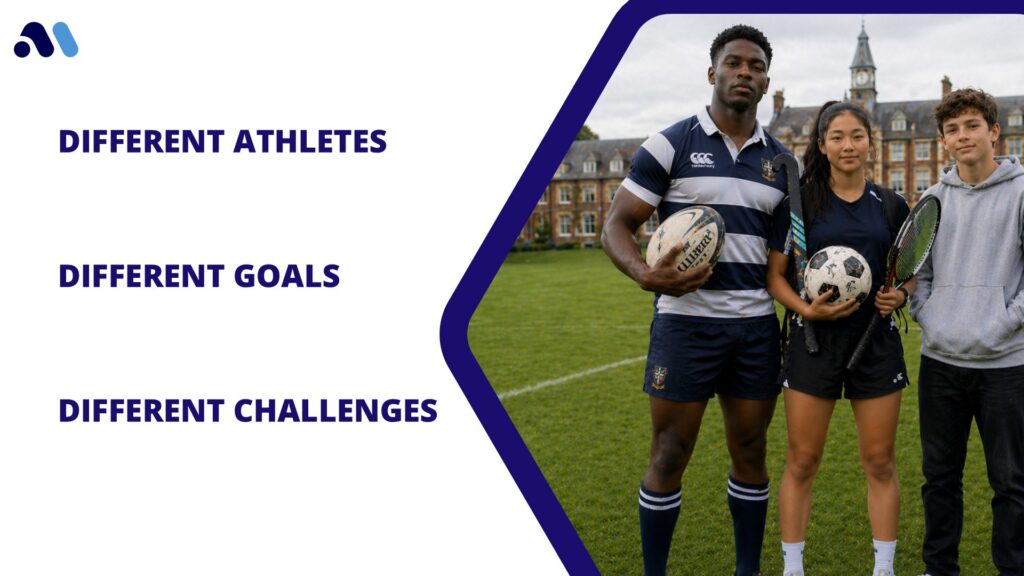
The first is a 17-year-old rugby player. He trains with a Premiership academy, plays for the school 1st XV, attends regular strength and conditioning sessions, and sits on the edge of national selection.
The second is a 16-year-old who seems to play everything. Hockey through the autumn and winter. Tennis in the summer. Football whenever she gets the chance. School teams, club teams, social sport. She says yes to everything.
The third is a 14-year-old who enjoys sport but spends most of his week sitting in lessons, travelling between school and home, and engaging in relatively little structured physical activity. When Saturday arrives, he pulls on his boots and plays.
All three are athletes. All three attending the same school. All three may be cared for by the same sports medicine team.
Yet from a clinical perspective, they have almost nothing in common.
And that is where many of the challenges in school sport begin.
Seeing the Whole Picture
Over the last decade I have worked across schools, Premiership rugby academies, national age-grade programmes, and specialist adolescent sports medicine services. One observation has become increasingly clear:
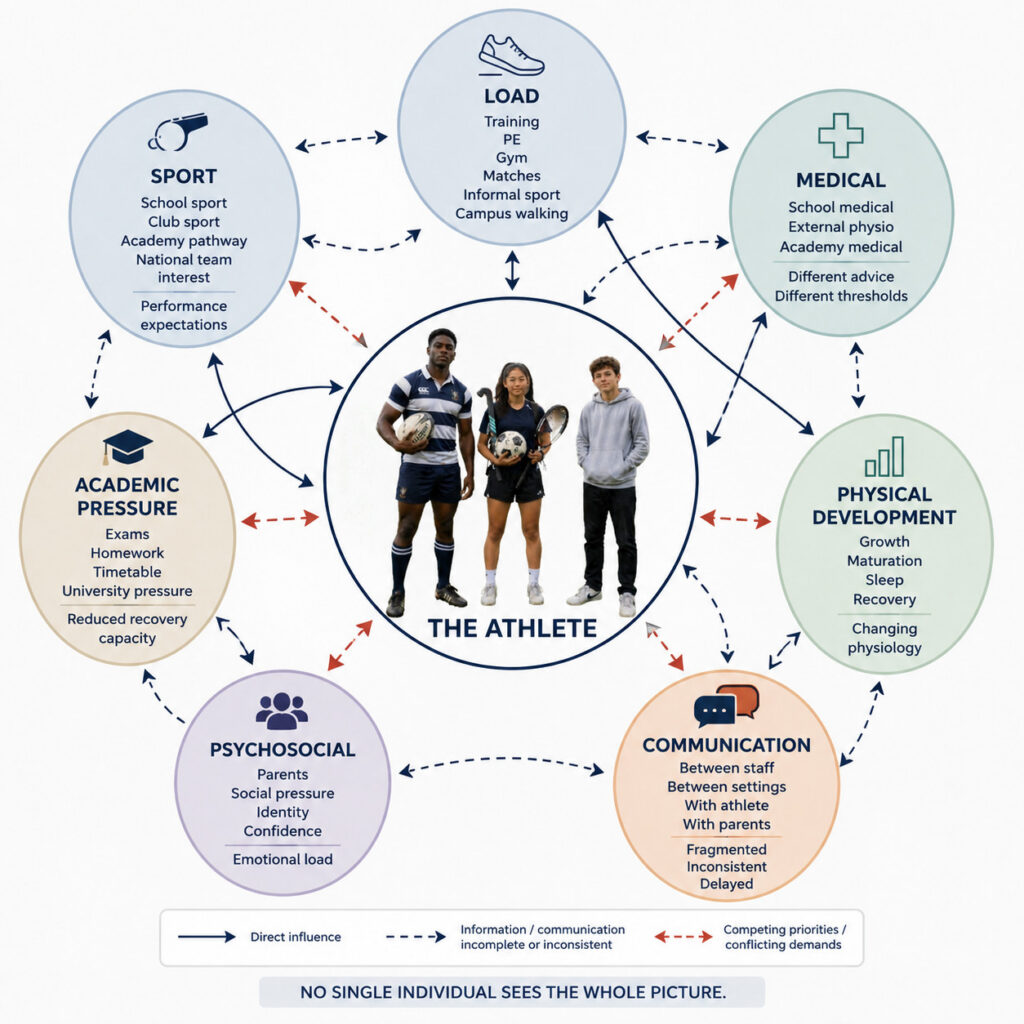
The greatest challenge in school sport is not managing injuries. It is seeing the whole picture.
The three pupils standing on that playing field may share a school, a timetable, and a sports department.
What they don’t share is context.
Their training exposure is different. Their physical preparation is different. Their developmental stage is different. Their recovery opportunities are different. The systems surrounding them are different.
Yet schools are often expected to support them through a single framework.
That is not easy.
The Athlete Surrounded by Support
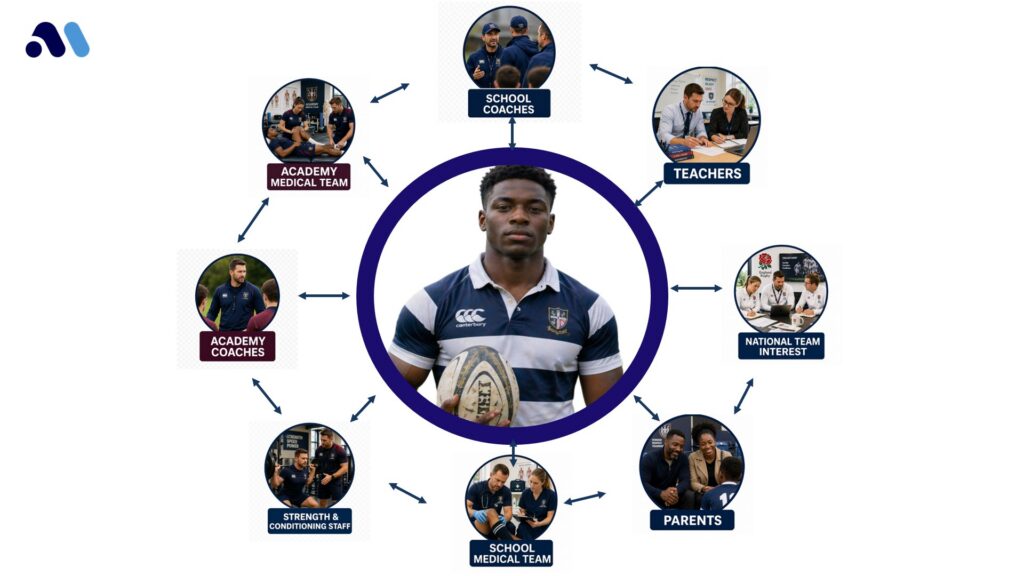
Many people assume the greatest challenge lies with the high-performance athlete. In reality, these young people are often surrounded by support. At school, at their club, at their elite academy.
Coaches. Medical teams. Strength and conditioning staff. Teachers. Parents.
Everyone is trying to help. Yet every environment has slightly different priorities.
The school may prioritise availability. The academy may prioritise long-term progression. Parents may focus on opportunity. Teachers may focus on academic performance.
The athlete sits in the middle of all of it.
The challenge is not support. The challenge is coordination of it
When communication is strong, these systems work remarkably well. When communication is fragmented, problems emerge surprisingly quickly.
The Athlete Nobody Fully Sees

The multi-sport athlete presents a completely different challenge.
She is often one of the most engaged young people in the school. She loves sport. She participates enthusiastically. She embraces opportunities.
From the outside, this appears entirely positive. And often it is.
But there is a hidden problem: Nobody sees her whole week.
The hockey coach sees hockey. The tennis coach sees tennis. The football coach sees football. Parents see enthusiasm. Friends see somebody enjoying sport.
Yet very few people see the total accumulation.
Her training load is spread across multiple environments, many of which sit outside formal monitoring structures.
Because she is not on an performance pathway, she often escapes the oversight that more obvious performance athletes receive.
Her challenge is not motivation. It is visibility.
The Athlete We Talk About Least
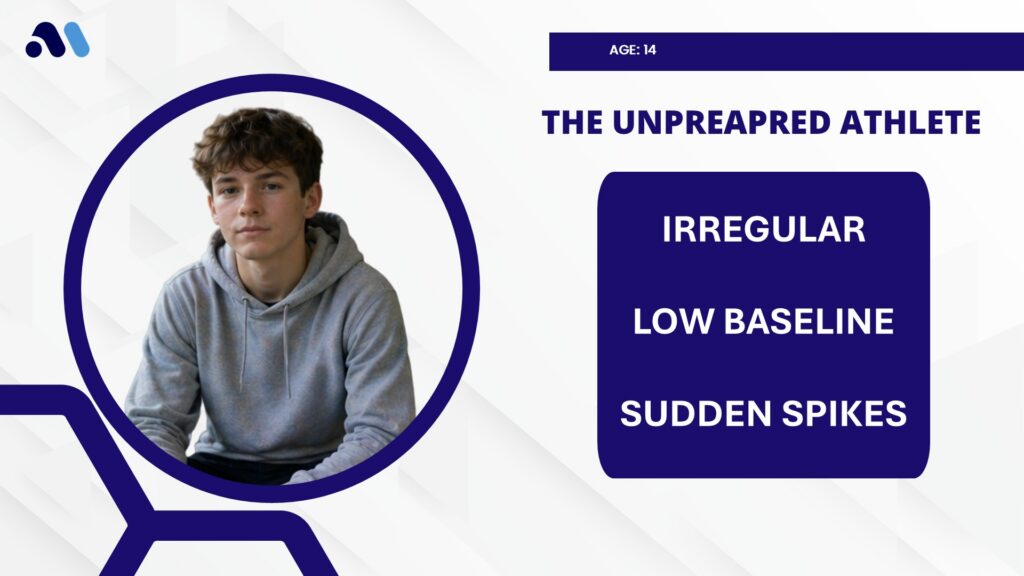
The third athlete is perhaps the most overlooked.
He participates. He enjoys sport. He turns up when asked.
But his sporting life is often characterised by long periods of relatively low activity interrupted by sudden spikes in demand.
Long school holidays of nothing, then suddenly straight back into a full sporting schedule. Multiple days of low activity sitting at has desk at school, gaming in the evening at home then boots on and off to play a football match.
The problem is that you can be participating without being physically prepared for the demands being placed upon you.
And this becomes even more important during periods of rapid adolescent development.
Because rapid growth plus inconsistent loading is often where vulnerability appears.
The Problem Is Not the Athlete
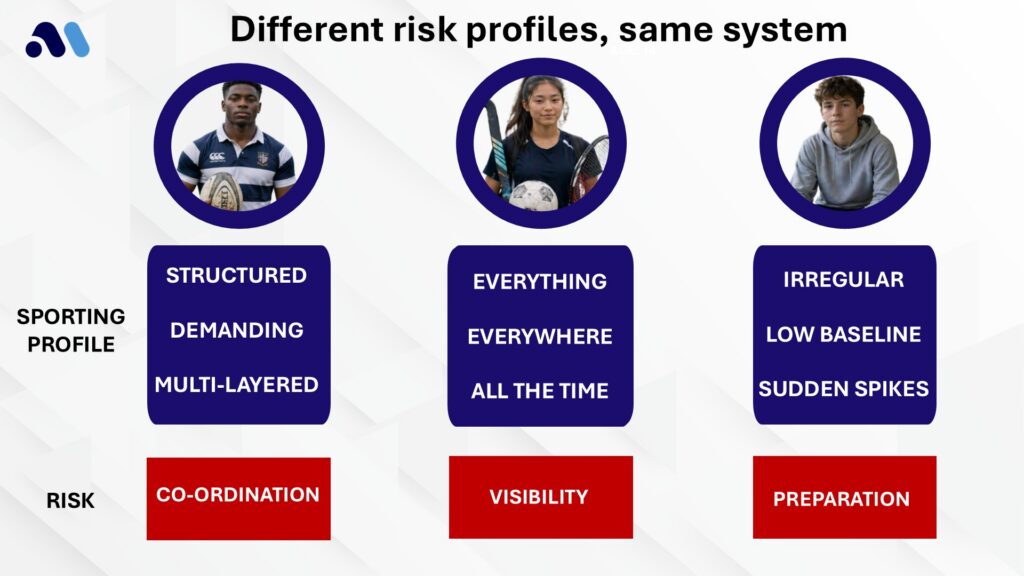
The pathway player needs coordination. The multi-sport athlete needs visibility. The less prepared athlete needs progressive exposure and preparation.
Three athletes. Three completely different challenges. Yet all are often managed within the same system.
And that is why I increasingly believe that many of the problems we encounter in school sport are not athlete problems at all. They are systems problems.
Modern school sport is becoming increasingly complex.
Young people now move between schools, clubs, academies, representative programmes, social sport, gym environments and academic commitments with remarkable speed.
Every environment may be acting sensibly. But every environment may be acting independently.
The problem is that the athlete experiences all of them simultaneously.
The coach sees training. The teacher sees the classroom. Parents see life at home. Medical teams see injury. The athlete experiences all of it.
Not All Load Is Labelled
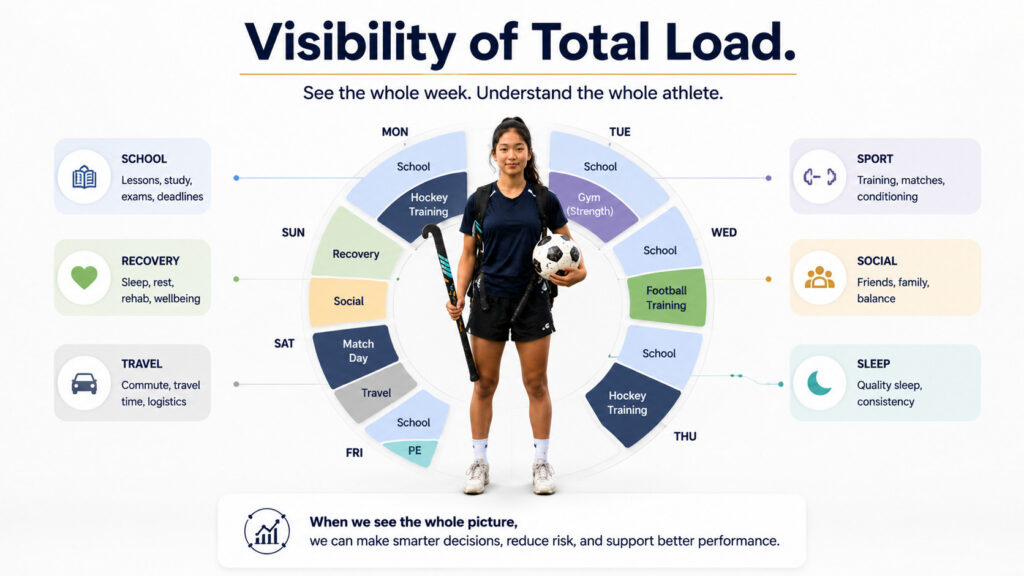
One of the recurring themes in adolescent sport is our tendency to focus only on the demands we can easily see.
Training sessions. Matches. Gym programmes. Conditioning work.
Yet young people experience much more than that.
Academic pressure. Exams. Sleep disruption. Social stress. Long commutes.
Periods of rapid growth.
The body does not distinguish between these demands. It simply responds to cumulative stress.
This is why medical advice can sometimes be technically correct but practically impossible.
An athlete may appear to tolerate training perfectly well on paper. Yet the wider context may tell a very different story.
Without visibility of that context, even good decision-making becomes more difficult.
Why Adolescence Deserves Its Own Conversation
Perhaps the most important lesson I have learned from working in this field is that adolescent sports medicine is not really about sport.
It is about understanding adolescence.
Sport simply provides the lens through which many of those challenges become visible.
For too long, young people participating in sport have occupied an awkward space between paediatric and adult services.
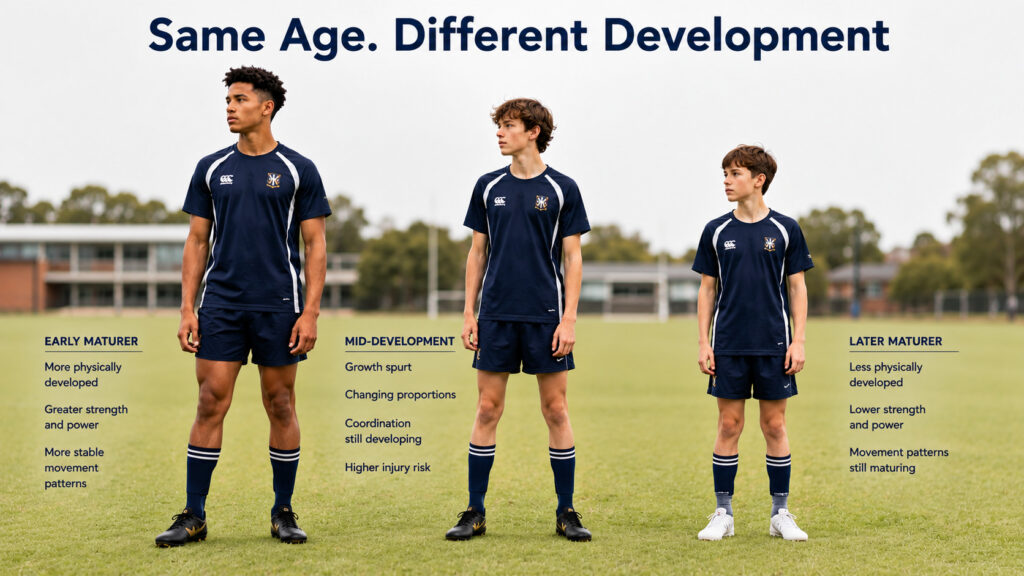
Adolescence is not simply a transition phase. It is a distinct developmental period with unique physical, psychological, educational and social demands.
Two young people of the same age may be in completely different stages of biological development. The same training load may be appropriate for one and excessive for another. The same injury may have entirely different implications depending on the person sitting in front of you.
Good adolescent sports medicine recognises this. It adapts. It anticipates. And it remains flexible.
What Good Looks Like

The answer is not intense monitoring. Nor is it more restriction. And it is certainly not over medicalisation of normal adolescent experience.
The answer is better understanding. Understanding the individual in front of you. Understanding their environment. Understanding the demands they are carrying. Understanding where they sit within the spectrum of adolescent sport.
Schools do not need perfect systems. But they do need systems that recognise context. Systems that communicate effectively. Systems that appreciate developmental differences.
And systems that place the young person at the centre of decision-making.
Because there is no single school athlete. There is a spectrum.
And the quality of school sports medicine is ultimately determined not by how well we manage injuries, but by how well our systems understand the young people experiencing them.