
Dr Mike Forsythe, Lead for Head Injury & Concussion service
Two fifteen-year-olds suffer concussions playing sport on a Saturday.
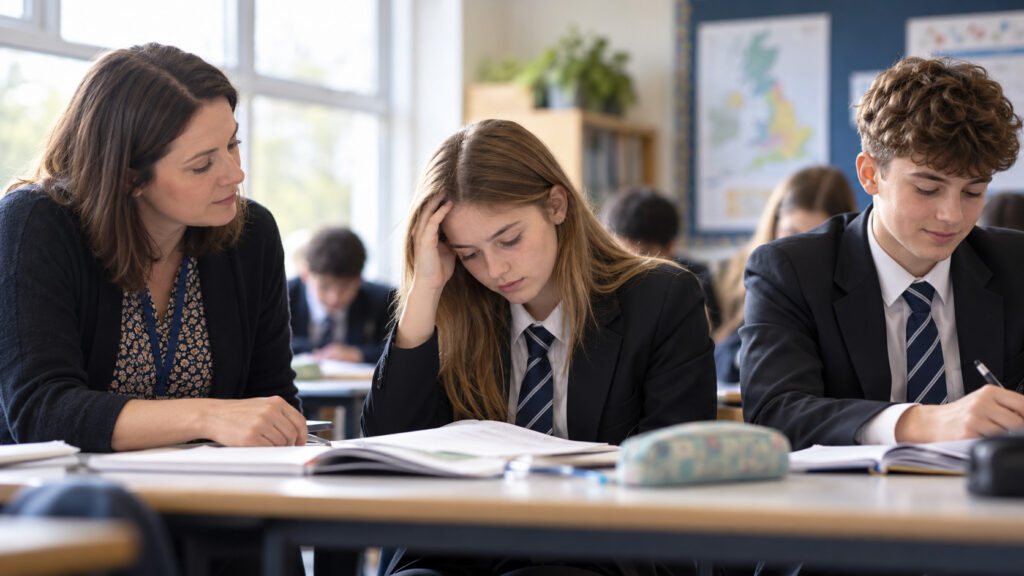
By Monday morning, the first child can’t read a page without developing a headache. He loses the thread of a lesson within minutes and finds screens uncomfortable.
The second is tired and has a mild headache, but she can sit through her lessons and follow the teaching.
Should they have the same return-to-learn plan?
Some people will tell you they should – that it is safer that way and feels more responsible. After all, Graduated Return to Sport follows a structured framework, with timeframes agreed nationally and internationally.
But Return to Learn is different.
Here, the priority is not protecting the player from another head impact, but optimising their recovery while helping them return to normal life and education. A standardised, ‘one size fits all’ approach is therefore not necessarily what is best for the individual – and it isn’t what the evidence supports.
Why a ‘one size fits all’ approach isn’t the answer
At Meliora, return to learn is one of the first things our doctors consider when managing a pupil after concussion, but we don’t believe every child who sustains a concussion should automatically be placed on the same formal programme.
That is consistent with the current international consensus. The Amsterdam International Consensus Statement on Concussion in Sport reports that the vast majority of young people — over 93% — achieve a full return to learning without additional academic support within 10 days. It also makes clear that not every young person needs a formal return-to-learn strategy or academic adjustments.
These should be introduced when symptoms interfere with concentration, reading, memory, screen use or other aspects of learning.
In other words: return-to-learn adjustments when they are needed, rather than pre-emptively.
Medical understanding has also moved on. Prolonged physical and cognitive rest is no longer recommended. A large study involving more than 1,600 children found that, among 8 to 18-year-olds, returning to school earlier was associated with a lower symptom burden two weeks after concussion.
An individual approach: a plan for those who need one
If a pupil needs a specific return-to-learn plan, we provide one. Depending on the individual, it might include:
- Shorter school days
- Rest breaks
- Reduced prep
- Additional time
- Adjusted examinations or tests
- Reduced screen exposure
- Modification of particular lessons
The boy in our first example might well need several of these. The girl in the second probably doesn’t need any. And that is the point
Barriers to recovery: the cost of over-medicalising concussion
For that second pupil, and for most pupils, we actively encourage a return towards normal school, normal academic expectations and normal routine. We don’t want to medicalise a recovery that doesn’t need it.
This matters more than it might sound.
Dwelling on what a young person might not be able to do, repeatedly directing attention towards symptoms, or creating an expectation of a long and difficult recovery can increase anxiety for pupils and parents. Recovery expectations, anxiety and wider psychosocial factors are increasingly recognised as important influences on concussion recovery.
This does not mean symptoms should ever be dismissed. It means that the way we frame recovery matters.
Young people need to know what to look out for and when to ask for help, but they also need reassurance that most concussions recover well and that returning towards normal life is part of recovery.
Support is only helpful when it matches the need. Too little leaves a struggling pupil unsupported. Too much can quietly create unnecessary barriers of its own.
The role of teachers: noticing when support is needed
Teachers are an important part of this process because difficulties do not always become apparent during a medical appointment.
A pupil may seem to be progressing well at home but struggle once they are back in lessons. They may lose concentration, find reading increasingly difficult, develop headaches as the day progresses, become unusually fatigued or take much longer than normal to complete work.
That information matters.
If teachers notice that a pupil is struggling, we would encourage them to flag this to the school medical team and family so that the pupil can be reviewed again. An individualised return-to-learn plan can then be introduced or adjusted based on what is actually happening in the classroom.
Equally, if a pupil is coping well, there is no benefit in introducing restrictions simply because they have had a concussion.
The classroom therefore forms an important part of the clinical feedback loop: teachers observe, schools communicate, clinicians review, and support is adjusted to match the pupil’s actual needs.
Resources alongside clinical advice
As well as individual advice from our clinicians, pupils and parents have access to a substantial library of resources, which we attach to appointment outcomes where appropriate. They cover returning to school, screens, sleep, anxiety and worry, mental health, exercise and other aspects of recovery.
You can find many of these here: https://www.return2play.org.uk/resources/
Escalation: when recovery is harder
For the smaller proportion of pupils whose recovery is more difficult, the level of support increases considerably.
They can move into our Complex Case pathway, with input from our most experienced clinicians who have additional specialist expertise in rehabilitation.
Our senior doctors review these cases, and our Concussion Rehabilitation Lead can provide additional input to the pupil, their family and the school’s medical team where appropriate.
This is particularly important when recovery is not progressing as expected. A slower recovery should not simply be labelled as a ‘normal variation’ and watched indefinitely. Persistent symptoms should prompt us to ask why they are continuing, whether there are identifiable contributors, and whether targeted treatment could help.
Why medical expertise matters
Concussion rarely exists in isolation. A young person’s recovery can be influenced by their previous health, , sleep, mood, anxiety, school pressures, sporting demands, other injuries and what else is happening in their life.
That is why experience matters.
Our clinicians not only have significant experience managing concussion. They also understand the wider health of the child and can distinguish between symptoms that are part of an expected concussion recovery and those that may point to something else.
That broader clinical perspective is particularly important when recovery is not straightforward. Persistent headache may have a cervical or migraine component. Dizziness may reflect vestibular dysfunction. Difficulty concentrating may be influenced by sleep, anxiety or academic stress. Exercise intolerance may require a different approach again.
The job is not simply to document that symptoms are still present. It is to work out why they are persisting and what, if anything, needs treating.
Return2Play’s clinical services are delivered by Meliora Medical Group, a CQC-registered healthcare provider. Assessment, diagnosis, academic adjustments, treatment, rehabilitation, referral and return-to-sport decisions all sit within a medically governed pathway.
Technology helps us deliver that expertise consistently and at scale, but it cannot replace the judgement of an experienced clinician who understands both concussion and the whole child in front of them.
What this means for you
If your child has had a concussion:
- Expect a conversation, not a template. The right plan depends on how your child is actually doing.
- Don’t be alarmed if no adjustments are recommended. For many pupils, that is good news and reflects the evidence.
- Tell us if learning becomes difficult. Problems with concentration, reading, memory, screens, fatigue or headaches are exactly when adjustments may need to be introduced.
- Expect the plan to change. Adjustments should evolve as recovery progresses and be reduced when they are no longer needed.
- Ask for review if recovery is slower than expected. Our Complex Case pathway exists to identify why a young person is struggling and provide more specialist input where required.
The aim is simple: give each young person the individualised support they need, while avoiding unnecessary barriers to returning to normal school, normal routine and normal day-to-day life