
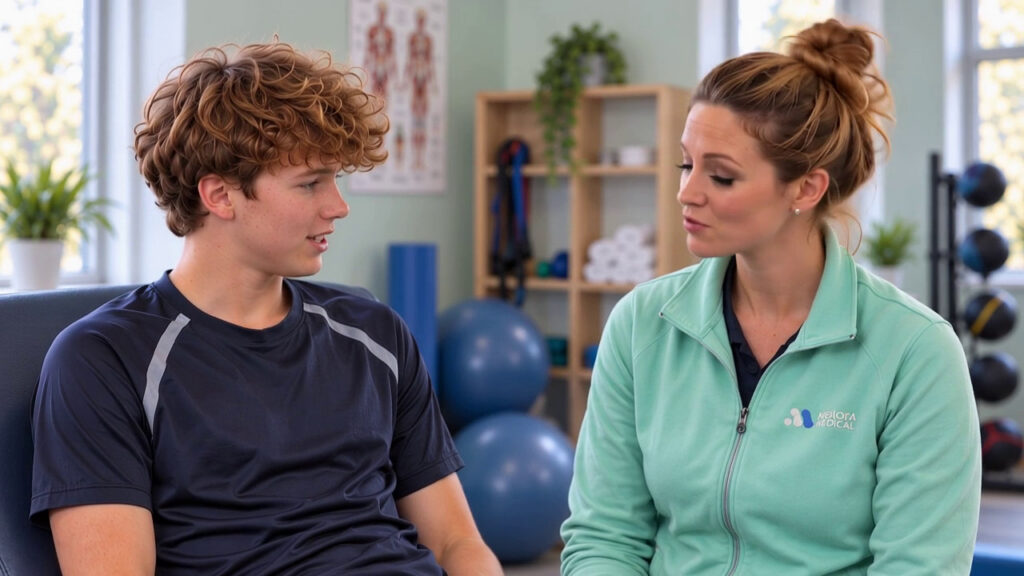
What School Physiotherapy Really Looks Like.
Tim Barton, Head of School Physiotherapy
Let’s start with the obvious question: what is physiotherapy? I won’t give you the textbook answer,
because for me it has always been about more than treating an injury.
It is about giving someone the information, reassurance, support, protection and time they need to
rehabilitate and work towards their goals. Those principles have stayed with me throughout my
career. What has changed is the environment our young patients are growing up in.
A different kind of pressue
I have spent more than a decade working with adolescents. In that time, sports medicine has moved on
considerably. So has the world around our patients.
At 15, I wasn’t expected to maintain an aesthetically perfect social media profile, play three sports at the
highest level, be a straight-A student and sit at the centre of my social circle. For many young people,
those expectations can feel very real.
At school, academic, sporting and social pressures meet, often in the same day. An injury becomes part
of that wider picture.
Meet Hugo
Hugo is 15 and recovering well from knee surgery. He is six months into a long rehabilitation, and he plays for a Category 1 football academy. In three weeks, he will find out whether he is being retained or released. He hasn’t played since last season. His team hasn’t lost a match since he was injured. While his knee is progressing, his place in football feels uncertain. His partner has recently ended their relationship, and he is too embarrassed to tell his friends or parents. He is sleeping badly, and his schoolwork is suffering.
What most people see is a predicted maths grade that has dropped from an A to a C and a pupil becoming difficult in class. Hugo has a lot going on.
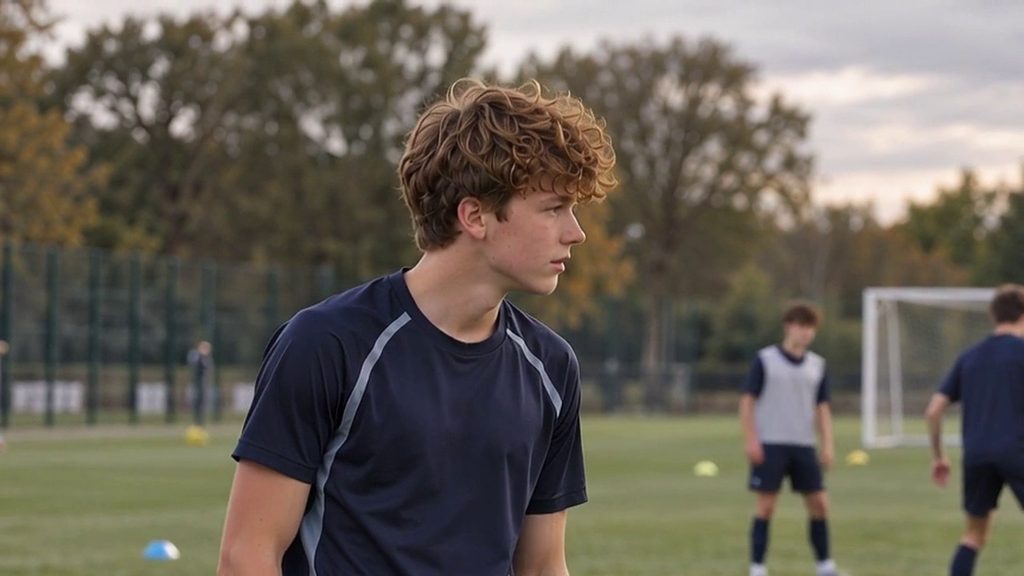
“A good school physiotherapist treats the injury but sees the whole pupil.”
The trust built during rehabilitation
Anyone who has worked or played in sport will recognise the conversations that happen in a physio
room. During a long rehabilitation, a physiotherapist may see a pupil several times a week for months.
The sessions are one to one, and they are working towards a shared goal.
That relationship has time to develop. The physiotherapist isn’t marking homework or picking the team.
Familiarity, consistency and a shared commitment to recovery can help a young person feel confident
enough to say what is really going on.
For Hugo, this conversation came within an established rehabilitation relationship. His physiotherapist
already knew him through months of work together. Asking how he was getting on opened a
conversation about more than his knee.
A flat week in rehabilitation, a missed session or a dip in performance can have a wider explanation. Understanding the context helps us understand how to support the pupil.
A shared picture, with Hugo’s consent
Hugo consented to his physiotherapist speaking with his parents, the school GP, the school counsellor and his maths teacher. Everyone involved could now understand more of what he was experiencing and offer support rather than frustration.
Hugo also decided to tell his friends about the breakup. They told him they had never liked his partner anyway.
Six months later, Hugo is predicted an A in maths and has a new partner. His club has offered him a professional scholarship a year early and, as a show of trust, made him captain of his age group. The toughest job for his physio now is making sure he keeps up his maintenance programme.
Hugo’s story shows how closely injury, wellbeing, sleep, learning and relationships are connected. A
good school physiotherapist treats the injury, sees the whole pupil and, with their consent, connects the
people who can help.
Physiotherapy shaped around school life
That is our approach at Meliora Medical. Our physiotherapists have worked with adolescents across the LTA, the FA, the RFU, elite club sport, performing arts, specialist NHS services, the private sector and schools.
That experience brings an understanding of young people’s injuries and conditions, including how growth and maturation affect them. It includes conditions such as Osgood-Schlatter’s and Sever’s disease, alongside managing training load for pupils playing several sports for school, club and county.
Our School Physiotherapy Service brings five connected elements into that environment.
On-site clinics. Regular physiotherapy clinics during the school week, helping pupils access assessment while limiting disruption to learning.
Pitchside cover. Access to pitch-side support from Meliora Medical’s team of match-day clinicians.
Specialist access. Direct referral to consultants and imaging through our range of specialist referral pathways.
Integrated communication. Consent-based updates on pupil health for parents, coaches, pastoral staff and teachers.
Pupil play status through Return2Play. A simple traffic-light system, synchronised with SOCS, gives coaches a clear view of recorded availability when selecting teams
In practice, that can mean connecting an assessment at a school fixture with a physiotherapy appointment, specialist input where needed and a rehabilitation plan. The pupil, their parents and the school can understand the plan and the team around them.
Our belief
At Meliora Medical, we believe every pupil deserves to feel heard and supported. We want every pupil we work with to have the support they need to come back stronger, like Hugo.
This is the standard of care young people deserve, and it’s a privilege to lead a team who share that belief.