Georgie Hall, Lead Concussion Rehabilitation Physiotherapist
When a someone has persistent symptoms after concussion, getting the right treatment isn’t always straightforward.
Specialist concussion rehabilitation is still relatively uncommon in the UK. Many families live hours from the nearest clinician with expertise in managing persistent post-concussion symptoms, meaning access to specialist care can depend as much on geography as clinical need.
That raises an important question: If patients can’t easily reach a specialist, can specialist care come to them?
Our recent research suggests that, for many patients, the answer is yes.
Access Is One of the Biggest Challenges
Most people recover from concussion within a few weeks. However, a significant minority continue to experience symptoms beyond the expected recovery period.
These persistent post-concussion symptoms are rarely caused by the brain alone. Problems with the vestibular (balance) system, visual system, cervical spine (neck), exercise intolerance and psychological factors can all contribute to ongoing symptoms. Successful rehabilitation therefore requires a comprehensive, multi-disciplinary approach rather than simply advising patients to continue resting, waiting and avoiding activity all together.
Delivering that rehabilitation also requires specialist expertise.
Concussion rehabilitation is a niche area of physiotherapy, combining knowledge of vestibular rehabilitation, oculomotor assessment, cervical dysfunction, autonomic exercise prescription and graduated return to learning and sport. While many physiotherapists are highly experienced musculoskeletal clinicians, relatively few have extensive experience managing persistent concussion symptoms.
For many families, particularly those living outside major cities, accessing that expertise can involve lengthy journeys, repeated time away from school and work, or simply not receiving specialist rehabilitation at all.
Improving access to specialist care was the driving force behind our remote concussion rehabilitation service.
Bringing Specialist Expertise to More Patients
Within our concussion pathway, any patient whose symptoms remain troublesome two weeks after injury is reviewed by one of our senior sports medicine doctors.
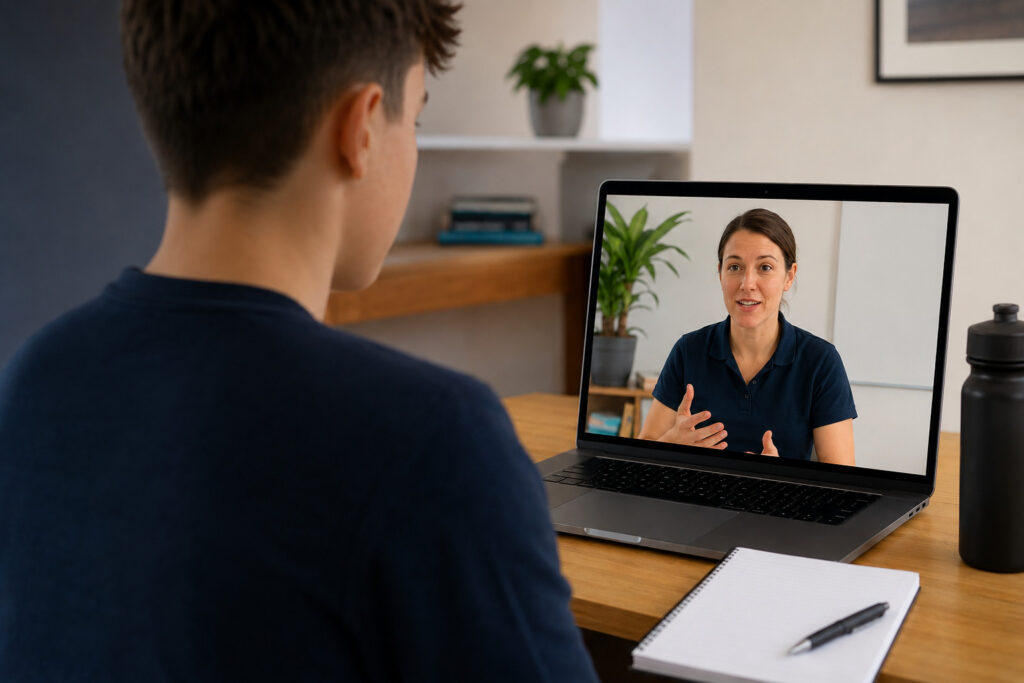
Where physiotherapy is felt to be appropriate, patients are offered specialist concussion rehabilitation delivered remotely via secure video consultation by an experienced concussion physiotherapist.
The aim isn’t simply to replace face-to-face appointments with online consultations. It’s to ensure that geography doesn’t prevent patients accessing specialist expertise when they need it.
What We Looked At
We reviewed every patient referred into our remote rehabilitation service over a 12-month period, collecting information including:
- Patient demographics
- Length of symptoms before rehabilitation
- Risk factors for developing persistent post-concussion symptoms
- Number of rehabilitation sessions required
- Clinical outcomes
What Did We Find?
During the study period, 76 patients were referred into the service, with 44 choosing to undertake remote concussion rehabilitation.
These were not straightforward cases.
The median duration of symptoms before starting rehabilitation was 34 days, although some patients had been symptomatic for considerably longer. More than 60% had two or more recognised risk factors associated with developing persistent post-concussion symptoms.
Despite this complexity, the outcomes were very encouraging.
Seventy-seven per cent of patients achieved complete resolution of their symptoms, requiring a median of just three rehabilitation sessions.
Equally important were the patients who weren’t suitable for ongoing remote management.
Eight patients were identified during their initial assessment as requiring a different approach. Some benefited from face-to-face vestibular assessment or cervical spine treatment, while others were referred directly to another specialty, such as neurology.
Although these patients did not continue with remote rehabilitation, the initial video consultation still served an important purpose by ensuring they reached the most appropriate clinician without unnecessary delay.
Remote Care Doesn’t Replace Face-to-Face Care
One of the key messages from our work is that remote rehabilitation is not about replacing traditional physiotherapy.
Some aspects of concussion assessment, particularly detailed vestibular examination and hands-on cervical spine assessment/treatment, simply cannot be replicated through a screen. Likewise, those requiring specialised autonomic testing will often benefit from in-person assessment.
Recognising those patients early is just as important as successfully managing those who can be treated remotely.
The value of remote rehabilitation therefore extends beyond convenience. It enables specialist expertise to reach patients who might otherwise have no realistic access to dedicated concussion rehabilitation, while also identifying the smaller group who genuinely require face-to-face care.
Looking Ahead
Our findings demonstrate that, for appropriately selected patients, specialist concussion rehabilitation delivered remotely can achieve excellent outcomes.
More importantly, they suggest that geography need not be a barrier to accessing expert concussion care.
As specialist concussion services continue to develop, future research comparing remote, face-to-face and hybrid rehabilitation models will help us better understand where each approach offers the greatest benefit.
At Meliora, our goal is simple: every young person with persistent symptoms after concussion should have access to the right expertise, regardless of where they live.
Sometimes that expertise will be delivered in clinic.
Sometimes it will be delivered through a laptop screen.
The important thing isn’t how the consultation takes place. It’s ensuring every patient receives specialist concussion rehabilitation from the clinician best placed to help them recover.
For more information on our Concussion Rehabilitation Service click here